
Introduction: Why Talking About Burnout Matters
If you’ve ever wondered how to avoid burnout, you’re not alone. Burnout affects more people today than ever before. Between work deadlines, family responsibilities, and constant pressure to keep up, it’s easy to feel completely drained.
Understanding how to avoid burnout starts with knowing what it really is.” The World Health Organization calls burnout a real work-related condition. It happens when stress piles up and you can’t manage it anymore.
This affects your mental health, physical health, and overall well-being. And it’s becoming a huge public health issue everywhere.
But here’s the good news. You can spot the early warning signs before burnout takes over. Things like feeling overwhelmed, emotionally exhausted, or losing interest in stuff you used to love. Catching these early helps you prevent burnout before it gets serious.

Step 1: Understanding What Burnout Really Is
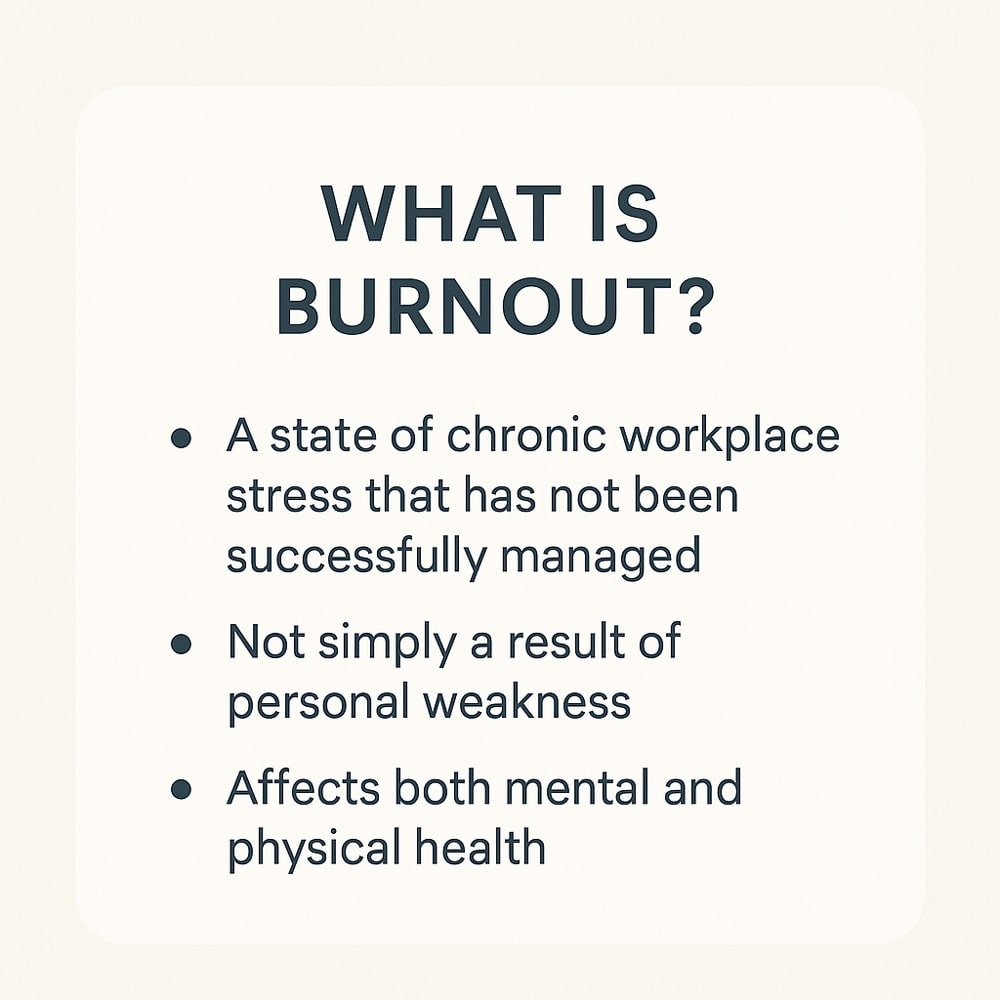
Let’s get one thing straight: burnout isn’t weakness. It’s your mind and body saying “enough” when long-term stress and workplace demands feel impossible to handle.
Stress is normal. But when it never stops, that’s when job burnout creeps in — and knowing how to avoid burnout starts with recognizing when stress has gone too far.
You might be heading toward burnout if you:
- Work under constant pressure with little or no control over decisions
- Feel unappreciated or unsupported by co-workers or managers
- Can’t separate work from your personal life
- Deal with chronic stress that won’t go away, even when you rest
- Feel overworked and undervalued — classic burnout warning signs that can help you spot the problem early and help prevent it from getting worse
Anyone can experience burnout. Students, parents, employees, even healthcare workers who dedicate their lives to helping others.
There’s actually a research tool called the Parental Burnout Inventory. It shows that even loving, devoted parents can burn out when caregiving stress becomes too much.
Step 2: The Gradual Process of Burnout
Here’s what’s tricky about burnout: it doesn’t happen overnight. It’s a gradual process that sneaks up on you slowly.
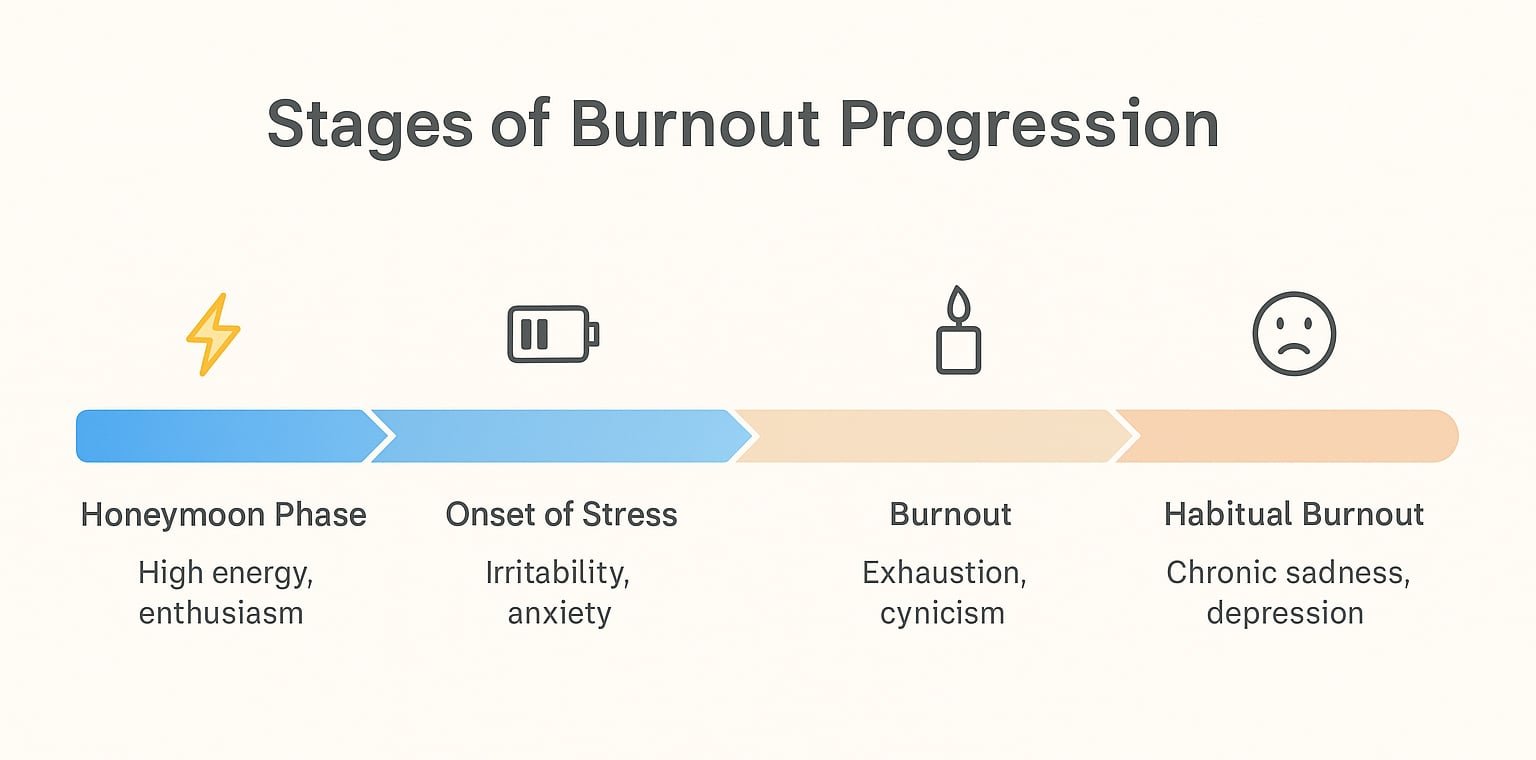
Many people describe it like “the flame going out.” You start strong and motivated, but as job burnout builds, your energy drops and your motivation slowly disappears. Understanding how to avoid burnout starts with recognizing this slow decline before it turns into full exhaustion.
Researchers break burnout into five stages:
- The Honeymoon Phase: You’re excited, optimistic, and ready to take on the world.
- Onset of Stress: Stress becomes your daily companion. Fatigue starts creeping in.
- Chronic Stress: You feel irritable, anxious, or tired way too often.
- Burnout: Emotional exhaustion hits. You’re feeling physically drained and disconnected.
- Habitual Burnout: Exhaustion becomes your new normal. Clinical depression might show up.
Knowing these stages can help prevent deeper burnout and protect your mental health. Spotting early warning signs allows you to act fast, rebuild your energy, and maintain balance before total exhaustion takes over. Learning how to avoid burnout early is one of the best ways to care for both your mind and body.
Step 3: What Does Burnout Feel Like?
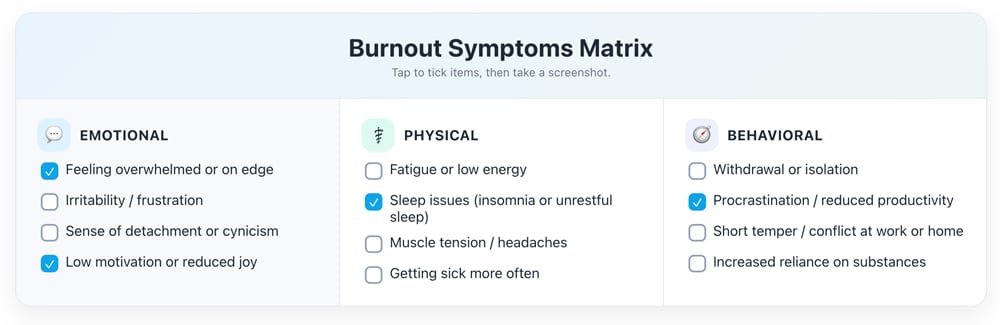
Burnout looks different for everyone, but there are common warning signs that help you recognize when job burnout is taking hold. Learning how to avoid burnout starts with noticing these emotional, physical, and behavioral signals before they become overwhelming.
Emotional symptoms:
-
Feeling emotionally drained or mentally exhausted
-
Losing motivation or feeling overwhelmed
-
Getting cynical or detached from work and relationships
-
Increased irritability (a big red flag for emotional exhaustion)
Physical symptoms:
-
Frequent illnesses, headaches, or stomach problems
-
Low energy levels and terrible sleep habits
-
Changes in appetite or racing heart (which can increase heart disease risk)
Behavioral signs:
-
Pulling away from co-workers or family members
-
Decreased job satisfaction
-
Trouble focusing or making decisions
If several of these sound familiar, you might already be experiencing burnout. Recognizing these patterns early can help prevent deeper job burnout and protect your mental health and overall well-being. Taking action now — whether through self-care, asking for help, or talking to a licensed therapist — is a powerful step toward recovery and learning how to avoid burnout long-term.
Step 4: Why Burnout Happens
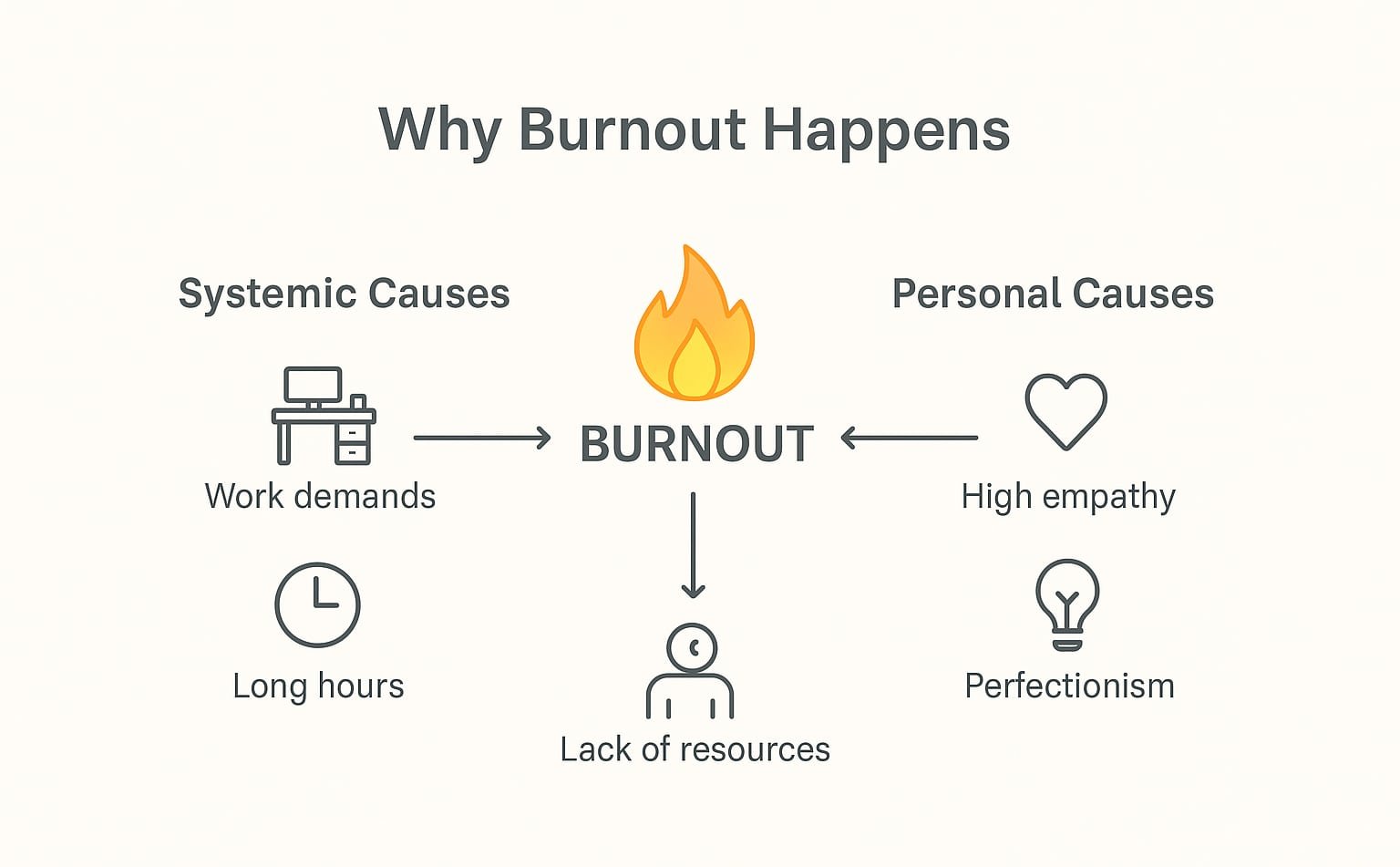
Burnout isn’t about being lazy or not trying hard enough. It usually develops from ongoing workplace stress and systemic issues in both jobs and personal life situations. Understanding how to avoid burnout means recognizing that this isn’t a personal failure — it’s a response to chronic stress that builds up over time.
One pattern clinicians see often: high-functioning adults with undiagnosed ADHD reach burnout because the cognitive cost of masking executive function challenges is enormous. If routines, planning, and emotional regulation have always taken twice as much effort as they seem to take for others, an adult ADHD assessment can be a useful piece of the recovery picture — not as a diagnosis chase, but as a way to understand what your nervous system has been carrying.
Key causes include:
-
Workplace demands that drain all your resources and energy
-
Poor work-life balance
-
Zero support from supervisors or co-workers
-
Constant stress and long hours without breaks
-
Feeling like you have little or no control over your tasks
Your lifestyle, personality, and past experiences can also play a role in burnout risk.
A systematic review of burnout research found that people working in healthcare, education, and customer service have a much higher risk of job burnout. Why? Emotional demands, limited recovery, and constant exposure to pressure. Healthcare workers, in particular, experience intense workplace stress and emotional fatigue that can harm both their mental health and physical well-being.
Creative and caregiving professionals also face serious occupational consequences when stress isn’t managed properly. Untreated burnout can lead to mental health challenges such as anxiety, clinical depression, and emotional detachment. Recognizing these risks early can help prevent long-term damage and protect your well-being. Knowing how to avoid burnout allows you to take small but powerful steps toward balance, resilience, and recovery.
Step 5: The Link Between Burnout and Mental Health
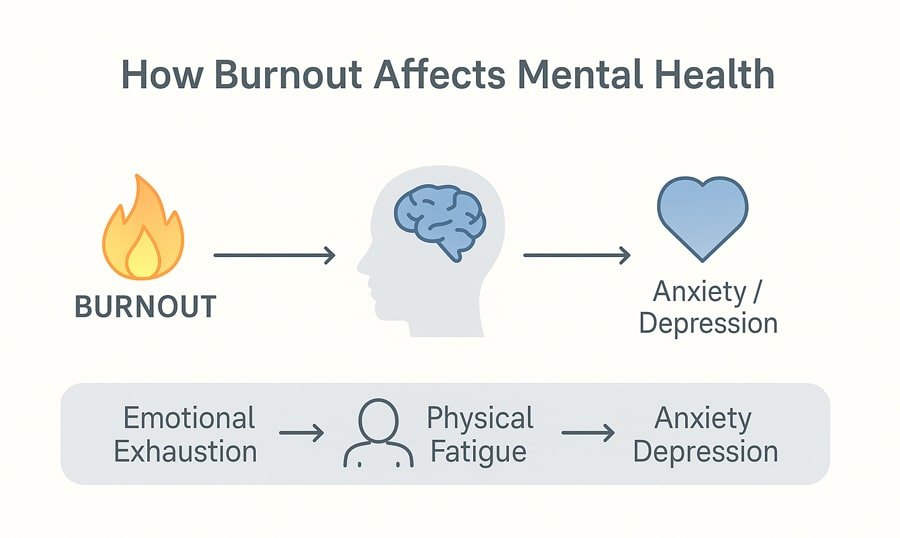
When you ignore burnout, it can lead to serious mental health challenges. Many people start to feel hopeless, empty, or emotionally numb. Over time, this kind of emotional exhaustion can develop into clinical depression or anxiety — both common outcomes of long-term chronic stress and untreated job burnout.
Burnout affects both your physical and mental health. You might notice physical symptoms such as fatigue, headaches, tension, or frequent illnesses. Emotional instability can also appear, making it harder to stay calm, focused, or motivated in daily life. Recognizing these early warning signs can help prevent deeper emotional strain and teach you how to avoid burnout before it severely impacts your well-being.
Working with a mental health professional is one of the most effective ways to overcome burnout. A trained therapist can help you process your feelings, rebuild your confidence, and create strategies for stress recovery. Therapy—especially online therapy—makes seeking support easier and more private, helping you take control of your mental health from the comfort of your own space.
Don’t forget the basics: good sleep, balanced nutrition, and regular breaks are essential parts of managing stress and promoting recovery. These simple habits can help prevent further job burnout and protect your physical and mental health over time.
At Aref Psychotherapy, our online service makes therapy accessible to Canadians everywhere. You can connect with a licensed therapist, practice mindfulness techniques, and create personalized strategies to manage chronic stress and overcome burnout in a safe, supportive environment.
Step 6: Personality Traits That Influence Burnout
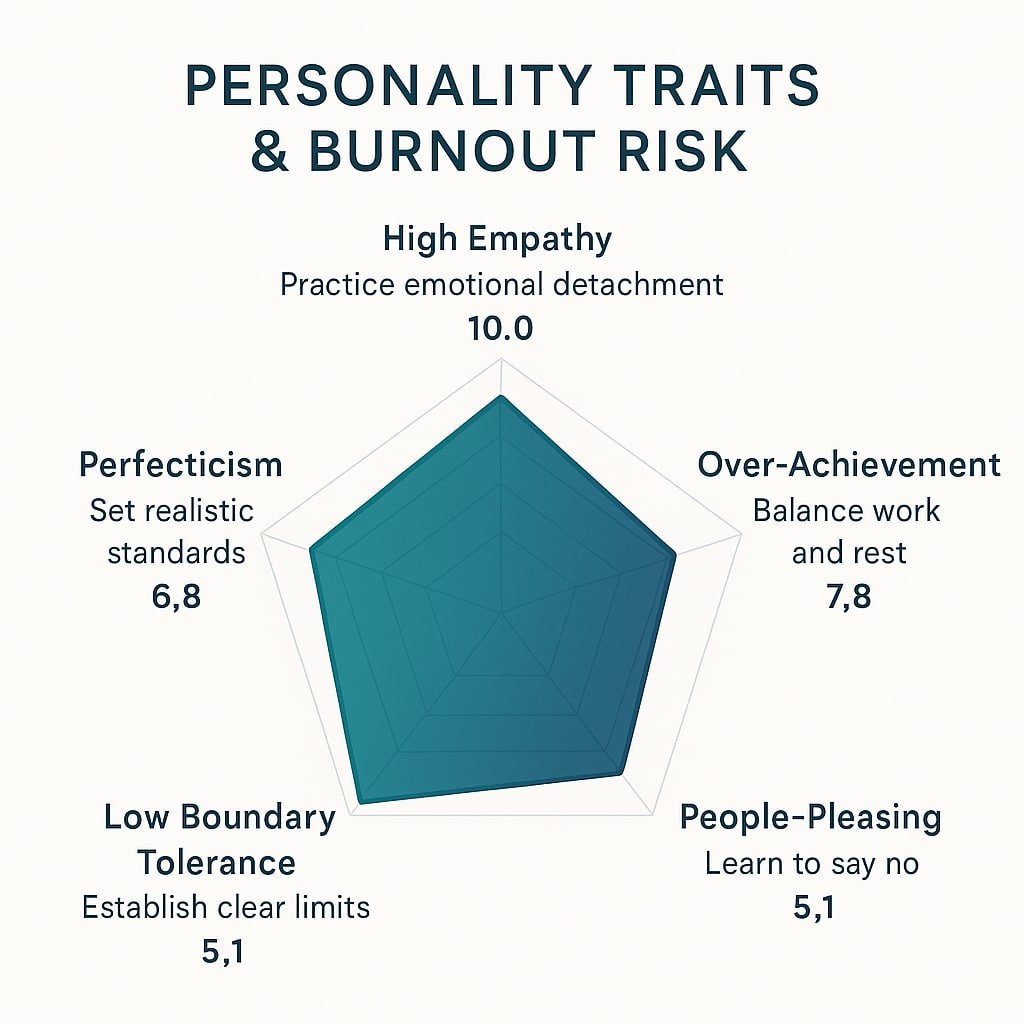
Some personality traits make burnout more likely. Perfectionists, highly empathetic people, and achievement-driven individuals often set sky-high standards for themselves.
These traits can absolutely lead to success — but they also make it hard to slow down, say no, or take breaks. Over time, this pressure creates chronic stress, emotional fatigue, and increases the risk of job burnout. Recognizing this pattern is an important part of learning how to avoid burnout and protect your well-being.
Understanding your personality traits helps you identify personal triggers and make protective changes before stress becomes overwhelming. Building self-awareness is one of the best ways to help prevent burnout and maintain balance in your daily life.
Here’s how to balance ambition with self-care:
-
Practice self-care daily — even 10 minutes of quiet time helps
-
Try progressive muscle relaxation or deep breathing to process stress
-
Learn to delegate tasks and ask for help when you need it
-
Focus on relationships that bring comfort and supportive relationships
-
Add mindfulness or breathing exercises to your routine for better stress management
A meta-analysis of burnout studies found that people who regularly practice mindfulness techniques and emotional awareness experience far less work-related stress — and they recover faster when they do experience job burnout. Small daily actions like these truly help prevent burnout and support long-term well-being.
Step 7: The 42% Rule — A Realistic Way to Prevent Burnout
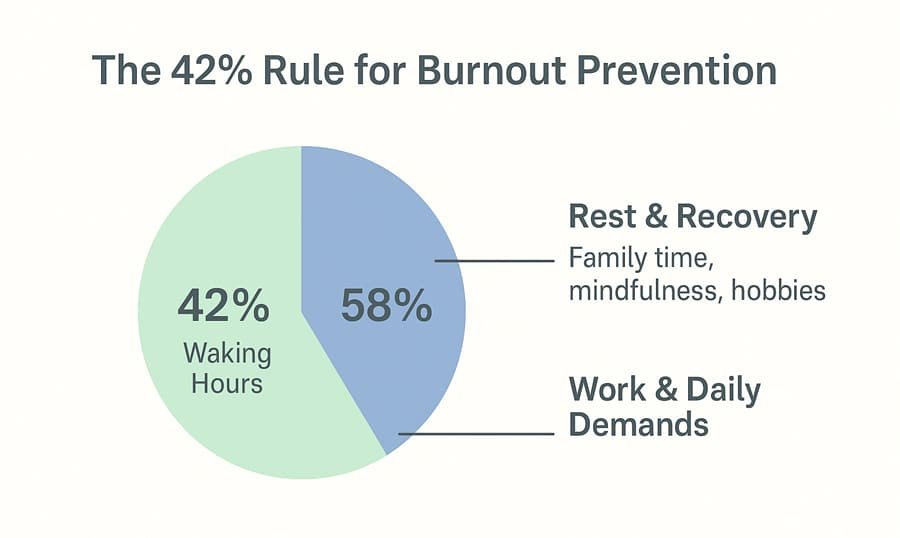
Have you heard of the 42% rule for burnout? It’s based on burnout research showing that you need at least 42% of your non-sleeping hours for rest or recovery each week to help prevent or prevent burnout. Understanding this balance is a practical part of learning how to avoid burnout in everyday life.
This time should include activities that genuinely recharge your mind and body — not just sleeping. Take walks, spend time with family members, practice mindfulness techniques, listen to music, or do something creative that restores your well-being. These small habits are powerful tools to help prevent job burnout and ongoing stress.
When you give yourself permission to rest, you create a sustainable balance between effort and recovery. Rest isn’t laziness — it’s a key part of maintaining physical and mental health, keeping your energy levels steady, and protecting your long-term well-being. Remember, learning how to avoid burnout starts with respecting your need for recovery time and giving your body space to heal.
Step 8: How to Identify Early Signs of Burnout
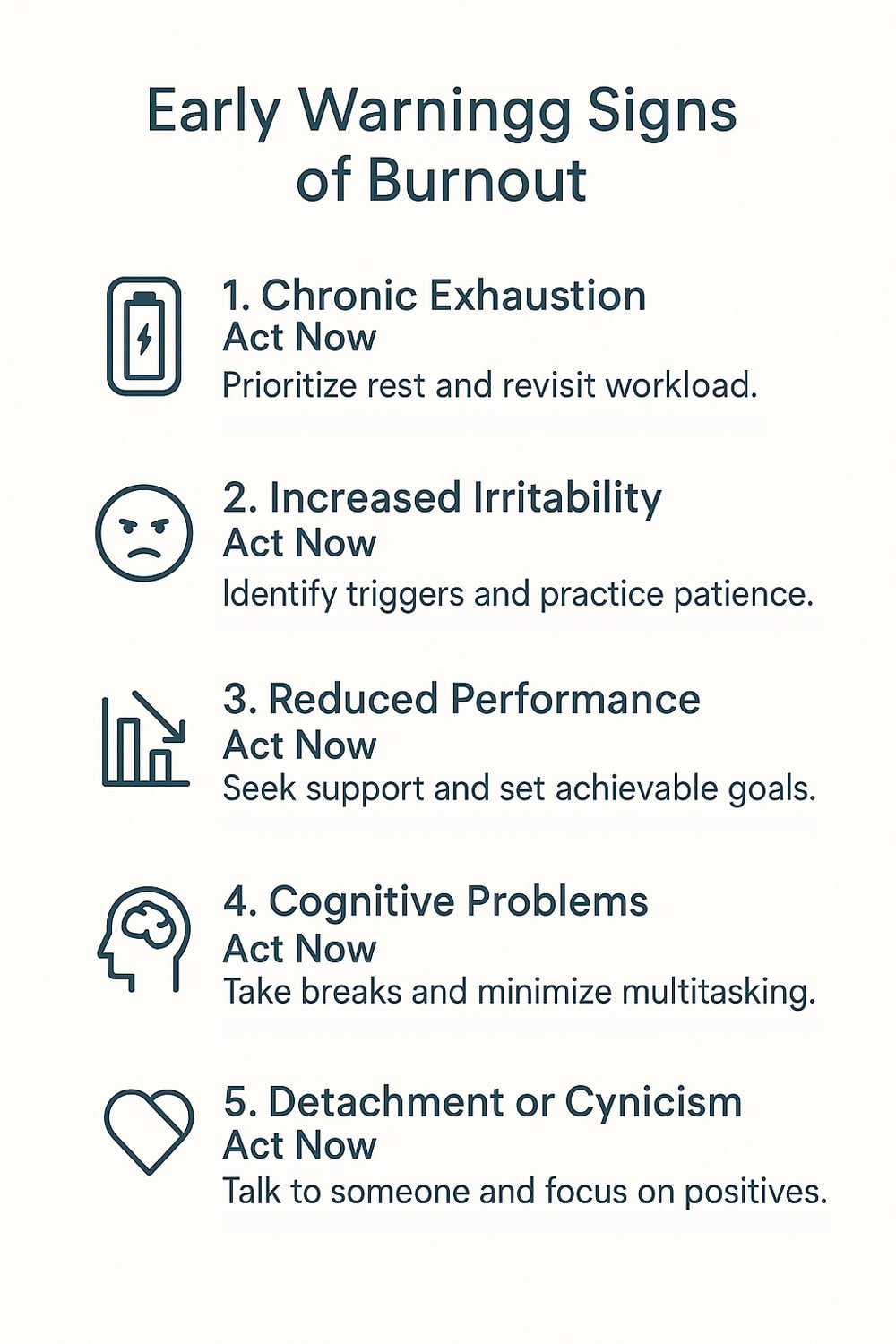
The earlier you catch burnout, the easier it is to recover and protect your well-being. Recognizing these early signs is one of the most effective ways to help prevent or avoid burnout before it takes over.
- Constantly feeling tired
- Losing interest in work or your personal life
- Getting more irritable or withdrawn
- Having trouble sleeping
- Feeling emotionally drained or numb
These are often the first red flags of job burnout, showing that your stress levels are too high and your energy is running low. When you start to notice these early signs, take action quickly — it’s the most powerful way to learn how to avoid burnout and stay balanced.
Talk to someone you trust, reduce your workload, or seek help from a mental health professional who can guide you through recovery. Taking small steps early can help prevent long-term exhaustion and restore your mental health and well-being.
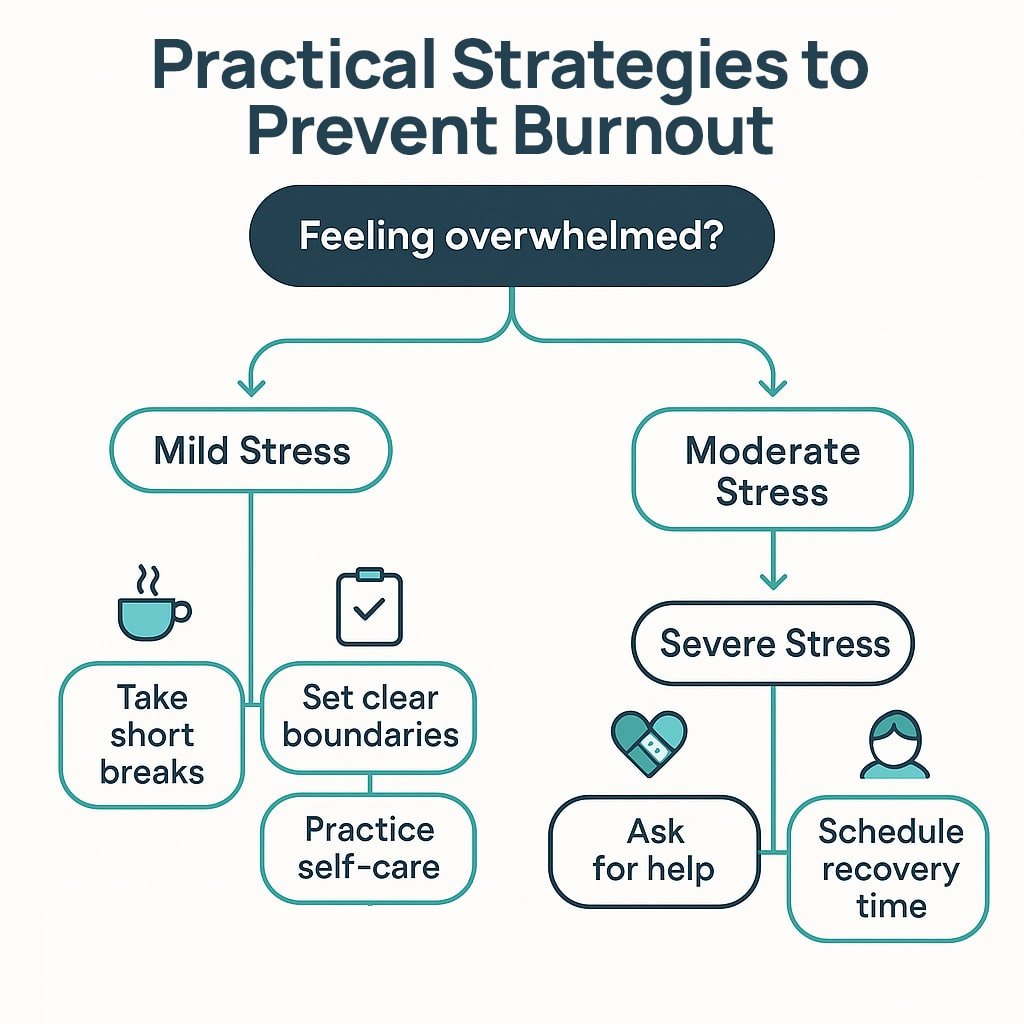
Step 9: Practical Strategies to Help Prevent Burnout
Preventing burnout isn’t about massive life changes overnight. It’s about small, consistent steps that support your mental health, well-being, and help you learn how to avoid burnout in daily life.
Here are practical strategies that actually work and truly help prevent burnout:
- Set clear boundaries.
Learn to say no when you need rest. Protecting your personal time helps maintain work-life balance and keeps your energy levels steady.
- Take regular breaks.
Even five minutes of stretching, walking, or mindful breathing can reduce stress and help you stay focused. Short pauses throughout the day can help prevent chronic stress from turning into full job burnout.
Delegate tasks when possible.
You don’t have to do everything yourself. When you delegate tasks, you create time to recover and focus on what really matters.
- Practice self-care every day.
Self-care isn’t selfish — it’s essential. Take time to eat well, rest properly, and do activities that bring joy or calm. Practicing self-care daily is one of the best ways to prevent burnout and protect your mental health.
Ask for help.
Reach out to co-workers, family members, or a licensed therapist when you start to feel overwhelmed. Seeking support early can help prevent deeper job burnout and emotional exhaustion. Remember, knowing how to avoid burnout also means knowing when to lean on others.
A systematic review of burnout research shows something powerful: people who regularly practice self-care and mindfulness are far less likely to experience chronic stress or job burnout. Small, steady steps toward self-care and awareness make all the difference.
Step 9a: Keeping Your Energy Levels Up
Keeping your energy up isn’t just about surviving another workday — it’s one of the most important parts of learning how to avoid burnout and protecting your mental health. When your energy levels drop for too long, job burnout can start to take over quietly.
The World Health Organization explains that burnout happens when workplace stress and chronic stress spiral out of control. Over time, that ongoing stress leads to emotional exhaustion, frequent illnesses, and even serious mental health challenges like clinical depression.
Here’s the difference: stress means having too many demands to manage. Burnout means you’ve reached a point of complete depletion — feeling empty, disconnected, and utterly exhausted. Recognizing this difference early can help prevent deeper exhaustion and support your overall well-being.
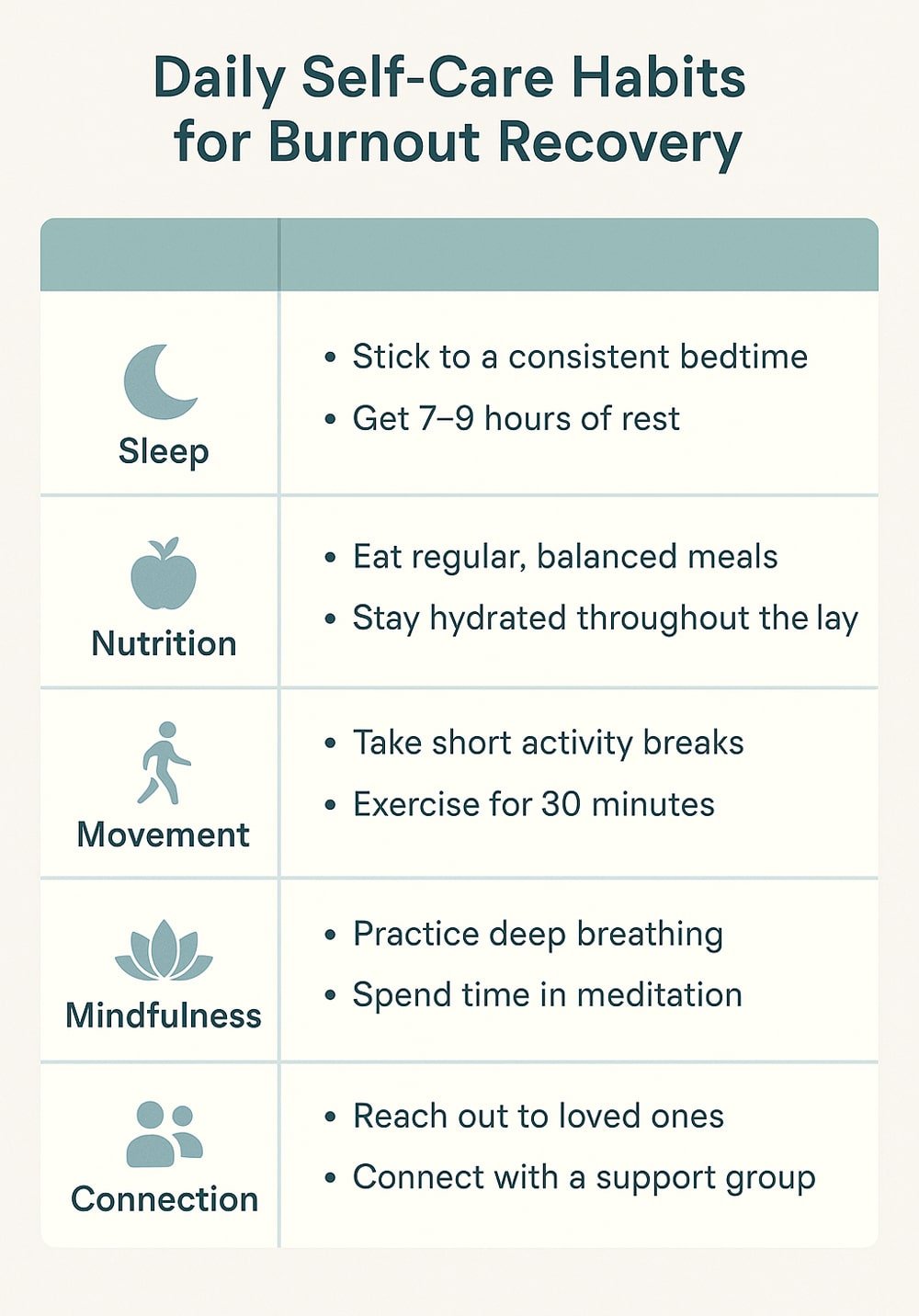
Refill Your Energy Every Day
To avoid burnout, make self-care a daily habit. Not a luxury.
Start with small changes:
Sleep Well
Consistent sleep habits help restore your body and mind.
Move Your Body
Light physical activity like walking or stretching helps you reduce stress.
Breathe Deeply
Try mindfulness techniques like progressive muscle relaxation or slow breathing to calm your system.
Ask for Help Early — You Don’t Have to Face Burnout Alone
When you start feeling tired, emotionally drained, or overwhelmed, that’s your body’s alarm bell. These early warning signs are your cue to take action, delegate tasks, slow down, and reach out for support before exhaustion deepens. Recognizing these moments early can help prevent long-term stress and teach you how to avoid burnout more effectively.
At Aref Psychotherapy, our online service makes it easy to connect with caring mental health professionals who understand what you’re going through. Working with a licensed therapist can help you process emotional exhaustion, rebuild your energy, and strengthen your overall well-being. Remember — you don’t have to face burnout alone. Asking for help is a sign of strength and one of the best ways to help prevent deeper emotional strain.
Quick Reminder
Protecting your energy levels isn’t selfish. It’s smart.
When you rest, move, and care for yourself, you’re not just preventing burnout. You’re creating a healthier, more sustainable work-life balance that supports long-term well-being.
Step 10: Self-Care and Recovery
Recovering from burnout is totally possible. But it requires time, patience, and being kind to yourself. Learning how to avoid burnout in the future starts by treating your body and mind with care during recovery.
Here are gentle ways to start your healing journey:
-
Get enough sleep.
Healthy sleep habits help your brain process emotions and restore energy levels. Try going to bed and waking up at the same times.
-
Move your body.
Physical activity like yoga, walking, or light stretching releases tension and helps you process stress physically. Regular exercise is one of the most powerful forms of self-care and can significantly reduce symptoms of emotional exhaustion and job burnout.
-
Eat nourishing foods.
A balanced diet supports both physical and mental health. It helps your body recover from chronic stress.
-
Use relaxation techniques.
Progressive muscle relaxation and mindfulness techniques are proven to reduce stress, lower anxiety, and calm your mind. Practicing these techniques regularly is a practical way to help prevent burnout from recurring.
-
Stay connected.
Supportive relationships with friends, family, or therapists provide emotional comfort and understanding. Don’t isolate yourself — connection heals.
Remember: burnout recovery is a gradual process. If you pressure yourself to “bounce back” too quickly, you may end up feeling emotionally drained again. Healing takes time, patience, and gentle daily self-care — all of which play a crucial role in learning how to avoid burnout and build lasting resilience.
Step 11: Building a Sustainable Work-Life Balance
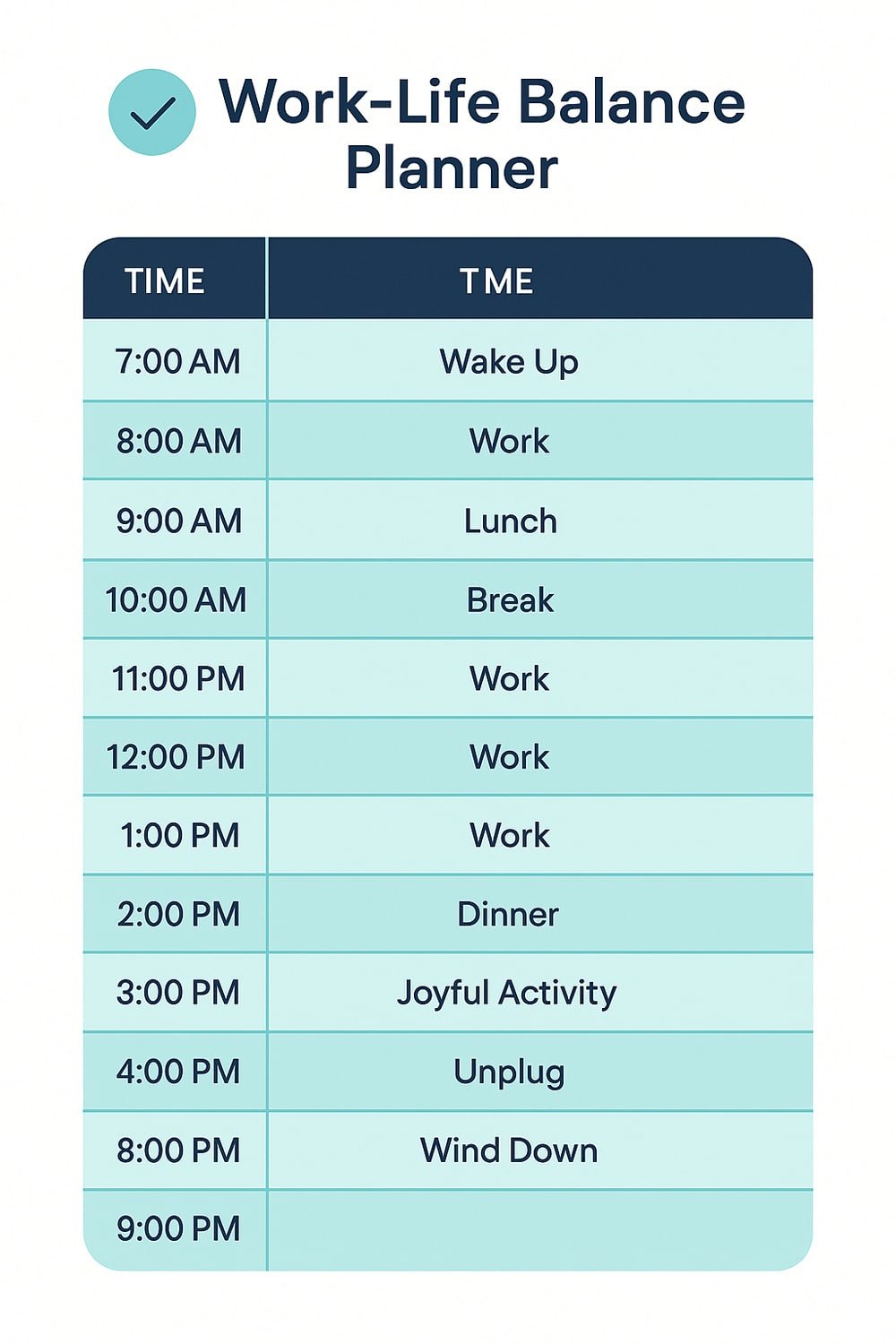
A healthy work-life balance isn’t about perfectly dividing time between work and home. It’s about finding a sustainable balance that protects your mental health, reduces workplace stress, and helps you learn how to avoid burnout before it starts.
Here’s how to build a lifestyle that supports your well-being and helps prevent burnout:
Create a routine that includes rest.
Plan your days with breaks, meals, and short moments of stillness.
- Unplug after work.
Turn off notifications when your workday ends. This helps your mind disconnect from work-related stress.
- Prioritize your personal life.
Spend time with loved ones, enjoy hobbies, or simply relax in quiet moments. Protecting your personal life is just as important as your professional goals and plays a big role in how to avoid burnout long-term.
Celebrate small wins.
Notice progress and appreciate effort, even when things aren’t perfect. This boosts motivation and job satisfaction.
- Recognize and celebrate small victories to keep your motivation up and maintain a positive outlook.
Research consistently shows that maintaining work-life balance significantly reduces occupational consequences like clinical depression, chronic stress, and even heart disease linked to long hours. Building a sustainable balance between effort and rest isn’t just healthy — it’s one of the most effective ways to help prevent job burnout and protect your emotional and physical health.
Step 12: Professional Help and Support From Licensed Therapist
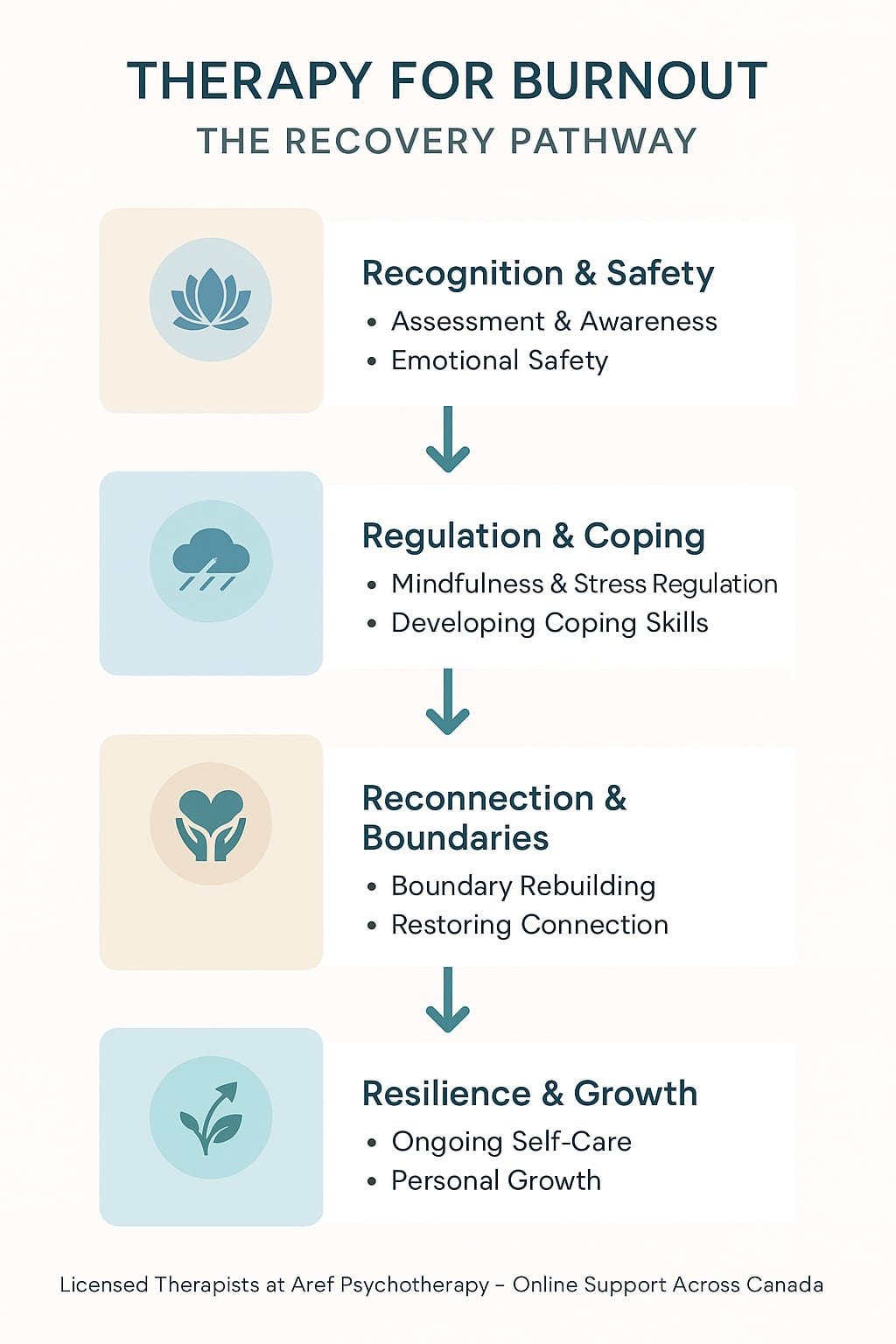
Sometimes burnout feels too heavy to manage on your own and that’s completely okay. Reaching out for support isn’t weakness; it’s one of the most powerful ways to help prevent deeper job burnout and begin real healing.
If you’re experiencing burnout and struggling to recover, a mental health professional can help you:
-
Understand the warning signs and emotional patterns causing burnout
-
Learn coping skills and mindfulness techniques
-
Develop a plan to reduce stress and rebuild your well-being
Therapy can be one of the most effective steps in learning how to avoid burnout long-term. Talking with a licensed therapist gives you space to safely explore your emotions, process stress, and find sustainable ways to overcome burnout.
You can access therapy easily through an online service like Aref Psychotherapy, created to make professional support available across Canada. Our mental health professionals specialize in helping you recover your energy, restore balance, and find motivation again in both your personal life and career.
Step 13: Burnout in Healthcare Workers and Parents
Healthcare workers and busy parents are among the people most affected by burnout. Understanding how to avoid burnout in these high-demand roles is essential for protecting both mental health and well-being.
For healthcare professionals, ongoing workplace stress, emotional fatigue, and long shifts can lead to job burnout, chronic stress, and even physical exhaustion. Over time, this pressure takes a toll on their mental health, energy, and relationships.
For parents, the Parental Burnout Inventory highlights how constant caregiving under pressure can cause emotional overload and job burnout at home. Many loving and devoted parents experience chronic stress when their responsibilities leave no room for rest or self-care.
If you work in health care or care for others, please remember to care for yourself too. Taking breaks, seeking support, and setting realistic expectations are essential steps that help prevent deeper burnout and protect your physical and mental health. Remember, caring for yourself isn’t selfish — it’s the foundation of true compassion and sustainable well-being.
Step 14: Job Burnout Prevention in the Workplace
Both organizations and employees play an important role in learning how to avoid burnout and maintaining a healthy work environment. A supportive workplace culture doesn’t just boost productivity, it helps protect mental health, well-being, and overall job satisfaction.
A meta-analysis of workplace stress and burnout research shows that supportive leadership, fair workloads, and open communication can significantly help prevent job burnout. When organizations value rest, flexibility, and employee well-being, they create healthier teams and reduce chronic stress that leads to burnout.
For Employers
-
Encourage open communication about stress and work demands.
-
Offer mental health days and flexible scheduling.
-
Provide access therapy programs or online services for staff.
For Employees
- Speak up when you need help or when tasks feel unmanageable.
- Build positive relationships with co-workers and supervisors.
- Join wellness activities that promote self-care and connection.
A meta-analysis of workplace studies shows that supportive leadership and fair workloads help prevent job burnout and improve well-being.
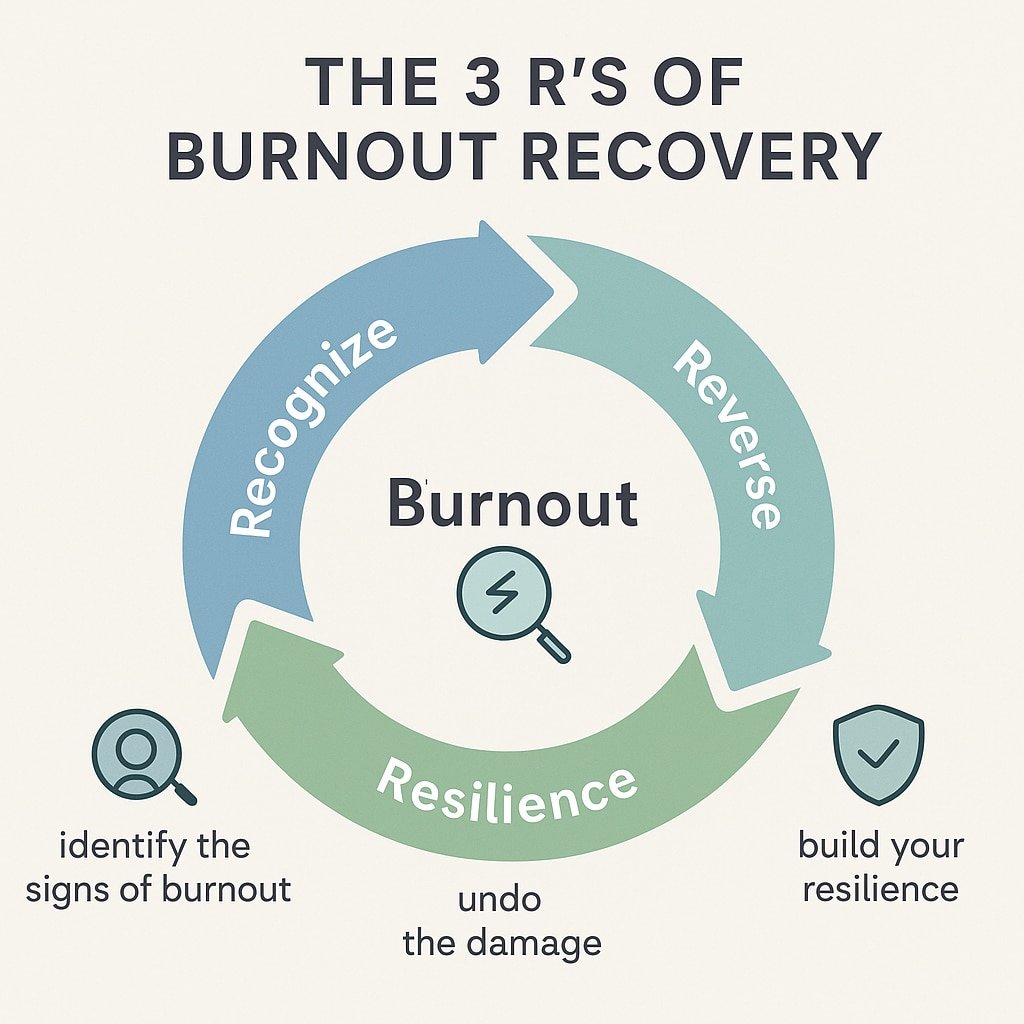
Step 15: The 3 R’s of Burnout — Recognize, Reverse, Resilience
Experts often summarize burnout recovery using the 3 R’s:
- Recognize — Spot the early signs of burnout.
- Reverse — Take steps to reduce stress and make changes.
- Resilience — Build habits that protect your mental health long-term.
This framework can guide you toward meaningful, sustainable change. By building resilience, you protect yourself from future burnout and maintain lasting well-being.
Workplace Anxiety vs. Burnout — How to Tell Them Apart
Workplace anxiety and burnout feel similar from the inside, but they are not the same thing — and they need different responses. Burnout is depletion: you are running on empty, detached, and cynical about work that used to matter. Workplace anxiety is anticipation: your body braces for something going wrong — a meeting, an email, a mistake — often before anything has happened.
A simple way to tell them apart: burnout usually eases when you genuinely rest; anxiety often does not. If a week off leaves you restored, you were likely depleted. If you spend the week dreading the return, anxiety is doing the driving.
Signs that point to workplace anxiety rather than burnout:
- Sunday-night dread that builds through the evening
- Replaying conversations or emails, looking for what you got wrong
- Physical symptoms before work — a tight chest, nausea, a racing heart
- Avoiding meetings, calls or speaking up, then feeling worse about avoiding them
- Difficulty switching off in the evening because you are still scanning for problems
They also feed each other. Anxiety keeps your nervous system switched on, which burns through energy and accelerates burnout. Burnout lowers your capacity to cope, which makes ordinary work pressures feel threatening. That is why treating only one often is not enough.
What helps: for burnout, the work is recovery — rest that actually restores, boundaries, and rebuilding a sustainable pace (covered throughout this guide). For workplace anxiety, the work is different: identifying the specific triggers, testing the catastrophic predictions rather than avoiding them, and learning to settle your nervous system in the moment. Cognitive Behavioural Therapy is well evidenced for this, and our team offers it virtually across Canada — see our virtual CBT therapy.
If the anxiety is tied to a specific workplace event — harassment, an injury, or something traumatic you witnessed — it may also be covered as a work-related mental stress claim. Our guide to WSIB benefits for mental stress and PTSD explains how that works in Ontario.
Step 16: Common Questions About Burnout
What is the 42% rule for burnout?
Why does burnout happen?
It's caused by chronic stress, long hours, workplace demands, and feeling like you have little or no control over your tasks.
What are the signs of burnout?
Feeling tired, emotionally drained, lack of motivation, and physical symptoms like frequent headaches or illnesses.
How do you overcome burnout?
By practicing self-care, improving sleep habits, using mindfulness techniques, and seeking support from a mental health professional.
Should I quit my job if I'm burnt out?
Not necessarily. First, take time off, talk to your manager, and explore support options. If burnout continues despite adjustments, then you can re-evaluate your situation.
Step 17: Moving Forward — Hope and Healing
Recovering from burnout is about rebuilding connection, trust, and self-compassion. It’s okay to rest. It’s okay to slow down.
Remember, burnout doesn’t define who you are. It’s your body and mind asking for change. With awareness, self-care, and support, you can reduce burnout, rebuild your energy levels, and restore your joy.
If you’re struggling or feeling overwhelmed, Aref Psychotherapy’s online service offers safe, professional guidance from compassionate licensed therapists who understand what you’re going through. You don’t have to face burnout alone — help is available, and recovery is possible.
Final Thoughts
Burnout is not a personal failure. It’s an occupational phenomenon recognized globally and backed by burnout research and systematic reviews. By combining practical strategies, supportive relationships, and mindfulness, you can prevent burnout, restore balance, and protect your mental health for years to come.